
Play Tower Rush Now!
Home → Mobile
Tower Rush Mobile
Tower Rush on mobile
The Galaxsys title Tower Rush launched in 2024 with a theoretical return to player rate of 97.00 percent, establishing a house edge of exactly 3.00 percent for all mobile sessions. This high RTP value significantly outperforms the 95.50 percent return found in Rabbit Road by InOut Games, offering better long-term retention for players using smartphones. The mathematical model remains consistent across devices, ensuring that the statistical advantage does not shift when switching from desktop to mobile platforms.
The maximum win cap for this crash game is fixed at 100x the stake, which stands in stark contrast to the x3,608,855 potential offered by Chicken Road from InOut Games. While other instant games allow for massive multipliers, Tower Rush limits the payout ceiling to prevent extreme variance during short mobile play sessions. Players seeking smaller, more frequent wins will find the 100x limit aligns with lower volatility expectations compared to high-payout alternatives in the market.
Operators may configure alternative RTP settings ranging from 96.2 percent to 97.6 percent depending on specific bonus floors or regional regulations, altering the expected value per round. This variability means the actual return can deviate slightly from the standard 97.00 percent figure cited in general documentation for mobile users. Such configuration changes are typically transparent in the game rules but require careful attention to ensure accurate bankroll management during play.
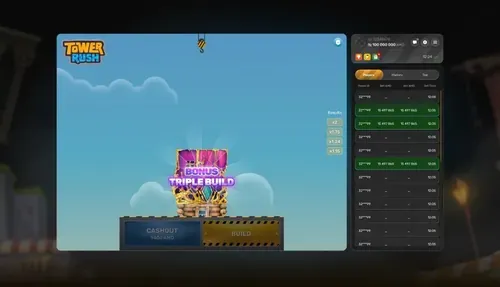
Playing in the mobile browser
Accessing Tower Rush via mobile browsers requires no additional software downloads, relying instead on HTML5 technology provided by the studio Galaxsys for direct gameplay. This method ensures compatibility with modern iOS and Android web views without the overhead of installing separate applications or updates. Players can initiate rounds immediately upon loading the page, maintaining the instant nature of the crash mechanic without technical barriers.
The provably fair system utilizes hash verification to guarantee outcome integrity, a feature that remains fully functional within standard mobile browser environments. Unlike some native apps that may restrict cryptographic checks, the browser version allows independent verification of each round's fairness through published hashes. This transparency builds trust among users who prioritize security and auditability when playing instant games on portable devices.
Comparative analysis shows that while Aviator by Spribe offers a similar crash format with a 97.00 percent RTP, Tower Rush distinguishes itself through its tower-building mechanics rather than simple multiplier growth. The browser performance for both titles depends heavily on network latency, but Tower Rush’s stepwise floor progression may introduce slight input delays compared to linear games. Users should ensure stable connections to avoid disconnection penalties during critical cash-out moments on mobile networks.
Screen layout on phones
The interface design prioritizes vertical stacking of floors, optimizing the display for portrait mode on smartphones where screen real estate is limited. Each successful floor increases the cumulative multiplier visually, providing clear feedback on the rising odds before the tower potentially collapses. This layout contrasts with wider horizontal designs used in traditional slot machines, focusing entirely on the central action area for immediate comprehension.
Touch targets for the cash-out button are positioned prominently within thumb reach, reducing the risk of missed inputs during rapid multiplier spikes. The visual hierarchy emphasizes the current multiplier value and remaining time, ensuring that critical data points remain legible on smaller displays. Compared to Fish Road by InOut Games, which uses complex animations, Tower Rush maintains a cleaner aesthetic that reduces processing load on mobile GPUs.
The auto cashout feature integrates seamlessly into the mobile UI, allowing players to set predetermined thresholds without constant manual intervention. This functionality is particularly useful for users who may experience connectivity issues or distractions while playing on handheld devices. By automating exit strategies, the game mitigates human error, ensuring that profits are secured according to the user’s pre-defined parameters during each round.
Touch controls and buttons
The primary interaction involves tapping to build the next floor or pressing the cash-out button to secure winnings before the tower falls. These binary actions simplify the control scheme, making it accessible even for users unfamiliar with complex gaming interfaces on touchscreens. The responsiveness of these buttons is critical, as delays can result in lost opportunities during fast-paced rounds typical of crash games.
Special bonus floors such as the Frozen Floor, Temple Floor, and Triple Build introduce unique mechanical variations that require specific timing for optimal engagement. Each bonus type alters the risk-reward dynamic, demanding quick decision-making from the player via the touch interface. These features add strategic depth beyond simple multiplication, encouraging players to adapt their betting patterns based on the current floor type displayed.
Unlike crash games like Chicken Road 2 by InOut Games, which rely on spinning reels and payline matching, Tower Rush eliminates physical metaphors in favor of direct numerical progression. The absence of spinning animations allows for faster round completion times, averaging less than ten seconds per cycle on most mobile devices. This efficiency enables higher session volumes, though it also increases the pace at which decisions must be made under pressure.
Performance on older devices
Galaxsys optimizes the game engine to maintain stable frame rates on older mobile hardware, preventing lag during critical multiplier calculations. The lightweight code structure ensures that the 97.00 percent RTP calculation occurs instantly without draining battery life excessively on legacy devices. This technical efficiency allows players with outdated smartphones to participate fully without experiencing graphical glitches or delayed responses.
Memory usage remains low due to the simplified asset library, which avoids heavy textures found in more graphically intensive titles like Aviator by Spribe. The reduced resource demand minimizes thermal throttling, preserving device performance over extended play sessions involving multiple rounds. Users reporting overheating issues with other instant games often find Tower Rush runs cooler due to its streamlined architecture.
Network resilience is enhanced through compressed data packets, ensuring that hash verification and bet confirmations transmit reliably even on slower 3G connections. This robustness is vital for maintaining fair play standards when external factors interfere with signal strength during mobile gameplay. Consequently, the game performs consistently across diverse network conditions, safeguarding the integrity of each round regardless of connection quality.
Tower Rush: key facts
| Parameter | Value |
|---|---|
| Game | Tower Rush |
| Studio | Galaxsys |
| Released | 2024 |
| RTP | 97.00% |
| House edge | 3.00% |
| Max win | 100x |
Data use during play
Galaxsys utilizes a hash-based verification system to ensure provable fairness, allowing players to validate the integrity of each round's outcome independently. This technical requirement means that Tower Rush generates unique cryptographic hashes for every tower build, which differ significantly from the static Random Number Generator logs found in traditional slot machines like those by Spribe. Players must maintain an active internet connection to download and verify these data packets before cashing out their winnings.
The theoretical return to player (RTP) for Tower Rush is set at 97.00%, representing a house edge of 3.00% over a very long run. While other instant games such as Dice or Mines also offer an RTP of 97.00%, Tower Rush's specific configuration allows operators to adjust this figure between 96.2% and 97.6%. Consequently, a player verifying a session with a lower operator setting faces a higher statistical disadvantage compared to the standard 97.00% baseline.
Playing on unstable connections
Since Tower Rush is a crash game where a multiplier rises until it collapses, network latency can directly impact the timing of a cash-out decision. Unlike spin-based slots where the result is determined instantly upon stopping the reels, a delayed response in Tower Rush may cause the player to miss the optimal exit point. The maximum win cap of 100x remains fixed regardless of connection speed, but the ability to secure that win depends entirely on real-time server synchronization.
Spribe's Plane Game also relies on real-time multiplier mechanics, making it similarly sensitive to poor connectivity as Tower Rush. However, Tower Rush introduces additional complexity through its three special bonus floor types: Frozen Floor, Temple Floor, and Triple Build. Each successful floor stack multiplies the cumulative odds, meaning that a dropped packet during a critical bonus round could erase a potential path to the 100x maximum multiplier without warning.
Battery drain in long sessions
Continuous rendering of the rising multiplier graph and the tower-building animation consumes significant processing power on mobile devices. A single round in Tower Rush involves dynamic visual updates for each floor level, which differs from the static reel stops seen in Galaxsys' other titles. Prolonged engagement with these high-frame-rate animations leads to faster battery depletion compared to simpler instant games like Plinko.
The volatility settings available in games like Spribe's Dice allow for shorter, more intermittent gameplay sessions that are less demanding on device resources. In contrast, Tower Rush encourages extended playthroughs as players attempt to stack multiple floors to reach the 100x cap. This sustained graphical load results in higher energy consumption per hour than low-volatility games that rely on minimal visual changes between outcomes.
Portrait and landscape modes
Tower Rush optimizes its interface for portrait mode, placing the tower structure vertically to maximize screen real estate on smartphones. This layout prioritizes the visibility of the current multiplier and the cash-out button, ensuring that the primary game mechanic remains accessible without zooming. The vertical orientation contrasts with landscape-first designs often used in video slots, focusing attention solely on the rising odds rather than decorative background elements.
TaDa Gaming's Chicken Dash utilizes a horizontal layout to accommodate its character-based mechanics, whereas Tower Rush stacks floors upward to fit narrow screens. The portrait format allows for easier one-handed operation, which is crucial for quick reactions when the multiplier approaches the collapse point. This design choice ensures that the auto-cashout feature and manual buttons remain within thumb reach, reducing input errors during rapid gameplay.
Sound and animation settings
The audio feedback in Tower Rush escalates in pitch and intensity as the multiplier climbs toward the 100x maximum win. These sound effects serve as auditory cues for the increasing risk associated with each additional floor stacked on the tower. Players can disable these animations to reduce cognitive load, though doing so removes the sensory reinforcement that accompanies successful floor builds.
Unlike Spribe's Dice, which offers adjustable volatility that might influence the frequency of sound triggers, Tower Rush's audio is tied strictly to the visual progression of the tower. The provably fair hash verification process does not generate audible alerts, keeping the soundscape focused purely on the game's tension. Disabling these effects may help players maintain focus on the numerical values of the multiplier rather than being distracted by thematic noise.
Phone versus desktop play
Galaxsys developed Tower Rush in 2024 as a crash/instant game that functions identically on mobile and desktop interfaces. The core mechanic involves stacking floors to multiply cumulative odds until the tower collapses or the player cashes out. This structural consistency ensures that the mathematical model remains unchanged regardless of the device screen size.
The theoretical return to player stands at 97.00% with a house edge of 3.00% across all platforms. Operators may configure alternative RTP settings ranging from 96.2% to 97.6%, which applies equally to phone and desktop sessions. These configuration variances depend entirely on the casino's technical setup rather than the hardware used for access.
Mobile players benefit from the same provably fair hash verification system available on larger screens. The interface scales to fit smaller displays without altering the auto cashout functionality or bonus floor triggers. Users maintain full control over their betting parameters while retaining access to the complete feature set on handheld devices.
Tablet experience
Tablets provide an intermediate display size that optimizes the visual clarity of Tower Rush building mechanics. The game renders the three special bonus floor types—Frozen Floor, Temple Floor, and Triple Build—with enhanced legibility compared to smartphones. This larger canvas allows players to monitor the rising multiplier progression more accurately during high-stakes rounds.
The maximum win cap of 100x applies uniformly across tablet browsers and native app environments if available. Galaxsys ensures that the RNG-based outcomes remain consistent with the published 97.00% RTP figure on this hardware class. Players utilizing tablets do not encounter reduced volatility or altered payout frequencies due to screen dimensions.
Touch interactions on tablets offer precise tapping for manual cashouts during rapid multiplier ascensions. The responsive design prevents accidental inputs that might occur on smaller phone screens with crowded UI elements. This ergonomic advantage supports faster decision-making when managing the risk of tower collapse before reaching higher multipliers.
What changes on a small screen
Smartphone interfaces compress the visual representation of Tower Rush floors but preserve all underlying game data. The maximum multiplier potential of x100 remains accessible despite the reduced horizontal space allocated to the tower graphic. Developers prioritize functional accessibility over graphical expansion to ensure compatibility with diverse mobile hardware specifications.
Font sizes and button placements adjust automatically to maintain readability on displays under six inches diagonal. The auto cashout setting remains easily configurable through nested menus that do not obscure the main gameplay area. Players can still track their cumulative winnings against the 3.00% house edge without visual interference from interface elements.
Network latency impacts mobile sessions similarly to desktop connections, though cellular data may introduce variable stability. The provably fair system continues to verify each round's integrity regardless of connection speed fluctuations. Users should ensure stable connectivity to prevent disconnections during critical cashout moments before the tower falls.
Interrupted rounds and reconnects
Tower Rush operates as an instant game where each round consists of a single rising multiplier sequence. If a mobile connection drops during a round, the outcome is determined by the server-side RNG at the moment of collapse. Reconnecting allows the player to view the final result without affecting the statistical validity of the previous session.
The 97.00% theoretical RTP calculation assumes uninterrupted participation over hundreds of thousands of rounds. Temporary disconnections do not alter the fundamental probability distribution of floor successes or bonus triggers. Players who lose connectivity simply resume viewing their account balance after the specific round concludes on the host server.
Mobile demo mode functionality allows users to practice reconnection protocols without risking real funds. The free-to-play version mirrors the real-money architecture regarding state persistence and crash mechanics. This simulation helps users understand how the game handles interruptions before engaging with actual wagering parameters.
Mobile demo mode
Galaxsys provides a demonstration version of Tower Rush that replicates the exact mechanics of the real-money product. The demo utilizes virtual credits instead of cash, allowing players to test the Frozen Floor and Temple Floor features freely. This mode excludes the 100x max win cap constraint found in some operator configurations, focusing purely on mechanical familiarity.
The theoretical return of 97.00% remains active in the demo environment to reflect accurate long-term expectations. Players can experiment with different betting strategies against the 3.00% house edge without financial consequence. This educational tool helps users grasp the timing required for optimal cashouts before the random tower collapse occurs.
Accessing the mobile demo requires no registration or deposit, aligning with standard industry practices for instant games. The interface loads quickly on both iOS and Android browsers, ensuring minimal barrier to entry for new users. This unrestricted access facilitates thorough understanding of the Triple Build bonus before committing real currency to the platform.
DemoRTP & VolatilityHow to PlayAuto CashoutStrategyBonusesMobileDownload & AppMax WinSimilar GamesReviewFAQSitemap
Tower Rush 2026